ISO/UNDP 53001 and the SDGs: How Businesses Align, Contribute and Prove It
- Sep, 30, 2026

ISO/UNDP 53001 and the SDGs: How Businesses Align, Contribute and Prove It
On 28 September 2026 ISO and UNDP launched the first international management system standard for the Sustainable Development Goals. It turns SDG alignment from a reporting exercise into a management discipline. This guide shows how a business finds its relevant SDGs, turns them into measurable action, and how VerdeVista helps you do it.
What ISO/UNDP 53001 changes for business
ISO/UNDP 53001, titled Management systems for the United Nations Sustainable Development Goals (SDGs), Requirements, was launched in Paris on 28 September 2026. It was developed jointly by the International Organization for Standardization (ISO) and the United Nations Development Programme (UNDP), and it is written for any organization: companies, governments, universities and civil society.
Until now, companies designed their own SDG approach from scratch, and most of it ended as a logo in an annual report. A management system standard replaces that with a structure that can be planned, run, checked and improved, in the same way organizations already manage quality or the environment.
Priority identification
Decide which of the 17 Goals matter most for your value chain, stakeholders and sector.
Objectives
Set objectives that connect to global targets, with owners and time frames.
Integration
Build the SDGs into governance, strategy and day to day operations.
Measurement
Track performance, review it, and improve continuously.
UNDP called the standard a tool to “embed the SDGs into the way they operate, lead and govern.”Marcos Neto, UN Assistant Secretary-General and UNDP Director, at the launch
Aligning and contributing are two different things
The 2030 Agenda gives the private sector a central role. Governments cannot close the SDG financing gap alone, so companies are expected to change strategies, products, investments and supply chains, not just comply with regulation.
Knowing which Goals are relevant to you
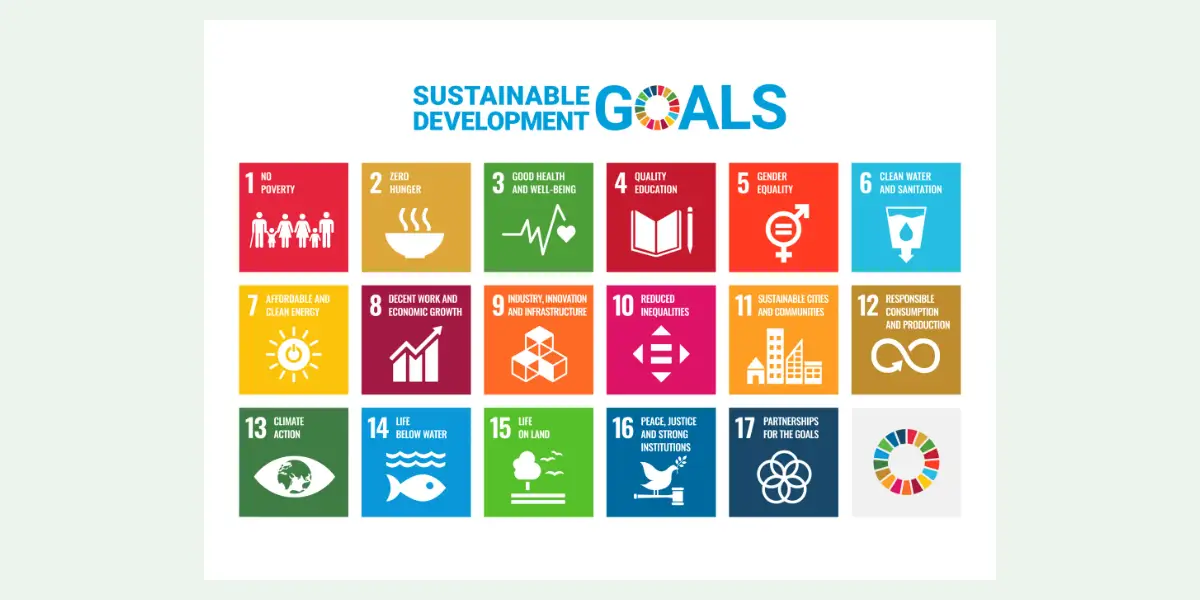
You map your activities, value chain and impacts against the 17 Goals and 169 targets, and select the ones that matter most. The output is a prioritised list with a rationale.
Doing something measurable about them
You set targets, assign owners and budgets, change operations and offerings, and report progress with evidence. The output is a change in real outcomes.
The test: if you removed the SDG icons from your report, would anything about how the company runs be different? If not, you have alignment without contribution.
Four business reasons to act now
Alignment is increasingly a condition of market access rather than a statement of values. Organizations that build a system now face a managed transition instead of a compliance scramble later.
Regulatory readiness
Disclosure duties on environmental and social impact are expanding across the EU, the UK, Asia and the Middle East.
Investment access
Green bonds and ESG-linked credit facilities ask for credible SDG alignment as a condition of eligibility.
Market positioning
Procurement, supply chain partnerships and government contracts increasingly depend on sustainability performance.
Talent and reputation
Purpose-driven organizations attract and keep the people who drive innovation.
Which SDGs are relevant to your business?
No company is material to all 17 Goals. Relevance depends on your sector, footprint and value chain. The table shows typical starting points for sectors common in Saudi Arabia and the GCC. Treat it as a hypothesis to test in a materiality assessment, not a conclusion.
| Sector | Typically relevant SDGs | Where contribution happens |
|---|---|---|
| Construction & real estate | SDG 6 · 8 · 9 · 11 · 12 · 13 | Low-carbon materials, water efficiency, worker welfare, waste diversion, green building certification |
| Energy & utilities | SDG 7 · 9 · 13 · 15 | Renewables share, efficiency programmes, methane and flaring reduction, biodiversity at sites |
| Manufacturing & industry | SDG 8 · 9 · 12 · 13 | Energy and material efficiency, circular design, process emissions, safe and fair workplaces |
| Food, retail & logistics | SDG 2 · 3 · 12 · 13 | Food-loss reduction, packaging, food safety, fleet and transport emissions |
| Banking & investment | SDG 8 · 9 · 13 · 17 | Sustainable finance products, portfolio emissions, SME access to capital |
| Health & education | SDG 3 · 4 · 5 · 10 | Access and affordability, workforce skills, inclusion, local capability building |
How a materiality assessment finds your priority SDGs
A materiality assessment is the evidence behind the word “priority”. It is also the practical answer to the first job the standard asks of you, which is to identify the Goals that matter. VerdeVista uses a six step, double-materiality method.
Map your context and value chain
List activities, sites, products, suppliers, customers and stakeholders. Most SDG impact sits outside the fence line.
Screen all 17 Goals and 169 targets
A first pass against every Goal narrows the field to a shortlist of roughly six to twelve.
Assess impact materiality
Rate how large, how serious and how reversible your positive and negative effects are. This is the inside-out view.
Assess financial materiality
Rate how each Goal’s trajectory, such as water scarcity, carbon pricing or labour rules, creates risk and opportunity for your performance. This is the outside-in view.
Weigh stakeholder priorities
Bring in clients, employees, regulators, investors and communities. A Goal that scores moderately but matters to a key client still deserves attention.
Set priorities, targets and owners
Combine the scores into a materiality matrix. Keep the top five to nine Goals, each with a target, baseline, KPI, owner and budget line.
How VerdeVista identifies your relevant SDGs and proves your contribution
We work in three phases, and each phase ends with a document you can use, not a slide deck to file.
Discover
Context and value chain mapping, stakeholder interviews and a screening of all 17 Goals against your sector and footprint.
Prioritise
Double-materiality scoring, a stakeholder-weighted matrix, and a priority SDG register you can defend to clients and lenders.
Embed
Targets, KPIs and owners, integration with your existing ISO systems, and a readiness review against ISO/UNDP 53001.
What you receive
- A screening of all 17 Goals and the targets that apply to your business.
- A materiality matrix showing impact and financial views, weighted by stakeholders.
- A priority SDG register with baselines, targets, KPIs, owners and budget lines.
- An integration roadmap that reuses your ISO 9001, ISO 14001 or ISO 45001 systems.
- A readiness review against the requirements of ISO/UNDP 53001.
- A reporting-ready evidence file for ESG disclosure, tenders and lenders.
Benefits for ESG, the 2030 Agenda and your bottom line
A clear SDG priority list does more than decorate a report. It gives ESG reporting a spine, and it lets you show how your company contributes to the national and global agenda.
| Benefit | What it means for ESG | Link to Agenda 2030 |
|---|---|---|
| Credible disclosure | Environmental, social and governance topics are chosen by evidence, not habit, so reports withstand questions. | Supports SDG 12.6, which encourages companies to report on sustainability. |
| Access to capital | Green bonds, sustainability-linked loans and ESG-focused investors ask for credible SDG alignment. | Mobilises private finance for the Goals, in the spirit of SDG 17. |
| Lower risk | Climate, water, labour and supply chain risks are found and managed before they become losses. | Advances SDGs 6, 8 and 13 where your exposure is highest. |
| Market access | Tenders, giga-project supply chains and export markets increasingly ask for evidence. | Connects your business to Saudi Vision 2030 programmes. |
| Efficiency and savings | Energy, water and waste targets reduce operating cost as they cut impact. | Delivers SDGs 7, 9 and 12 in measurable units. |
| Talent and trust | A clear purpose, backed by numbers, helps hiring, retention and stakeholder confidence. | Contributes to SDGs 4, 5 and 8. |
Saudi Arabia and the GCC
SDG relevance is unusually easy to anchor in the Kingdom because Vision 2030 programmes map onto the Goals. The same is true of the UAE Net Zero 2050 initiative and Qatar National Vision 2030. Regional priorities in renewable energy, food security, water stewardship and inclusive growth point to SDGs 2, 6, 7, 8, 9 and 13, among others.
- Suppliers to NEOM, Red Sea Global, Qiddiya and Diriyah Gate work under sustainability requirements that ask for evidence, not statements.
- Exporters to the EU face carbon-related requirements such as CBAM, which reward verified emissions data.
- A plan that reuses Vision 2030 language and metrics is easier for clients, regulators and financiers to read.
Four mistakes that turn alignment into SDG-washing
Claiming all 17 Goals
It signals that none were assessed. Five to nine well-evidenced priorities are more credible.
Reporting intentions as results
“We plan to support SDG 13” is not evidence. Show baselines, targets and progress.
Ignoring negative impacts
Reporting only good news invites challenge. State adverse impacts and how you manage them.
Doing it once
Priorities change with your business and regulation. Review the matrix at least annually.
Frequently asked questions
What is ISO/UNDP 53001?
It is the first international management system standard for the UN Sustainable Development Goals, developed by ISO and UNDP and launched on 28 September 2026. It helps organizations identify priority SDGs, set objectives, integrate them into operations and measure performance.
Do we have to address all 17 Goals?
No. The point of a materiality assessment is to select the Goals where your business has the greatest impact and exposure. Five to nine well-evidenced priorities are more credible than all 17.
Can we be certified to ISO/UNDP 53001?
It is published as a requirements standard, the kind organizations are normally audited against. Certification depends on accreditation and certification bodies, so confirm availability before promising a certificate.
How is this different from ESG materiality?
ESG materiality ranks topics that matter for reporting and investors. SDG materiality asks a wider question about your effect on people and the planet. A good assessment covers both and feeds both.
Find out which SDGs are material to your business
VerdeVista moves organizations from a list of Goals to a verified materiality matrix, targets and a reporting-ready evidence trail, tailored to Saudi Arabia and the GCC.
Check your SDG readiness in minutes
Answer a short set of questions about your sector, footprint and value chain to see which SDGs are likely to be relevant for you, before any consultant visits. The result is a starting hypothesis that a full materiality assessment then tests.
Start the SDG self-assessmentSources
ISO/UNDP 53001, ISO · ISO launch announcement · The 17 Goals, United Nations · Business & Sustainable Development Commission, Better Business, Better World
By VerdeVista Consulting Editorial Team · 30 September 2026