
What a Cement EPD Contains
A cement EPD is an independently verified declaration of the environmental impact of cement, calculated from a life cycle assessment. For cement, the declaration normally follows EN 16908, the product category rules for cement and building lime, together with EN 15804 and ISO 14025.
- Declared unit: usually 1 tonne of cement of a stated type
- Boundary: most often cradle to gate (stages A1 to A3), covering raw materials, transport and manufacturing
- Main indicator: global warming potential in kg CO2e per tonne, shown by life cycle stage
- Other indicators: energy and resource use, waste and further impact categories
Where the Carbon in Cement Comes From
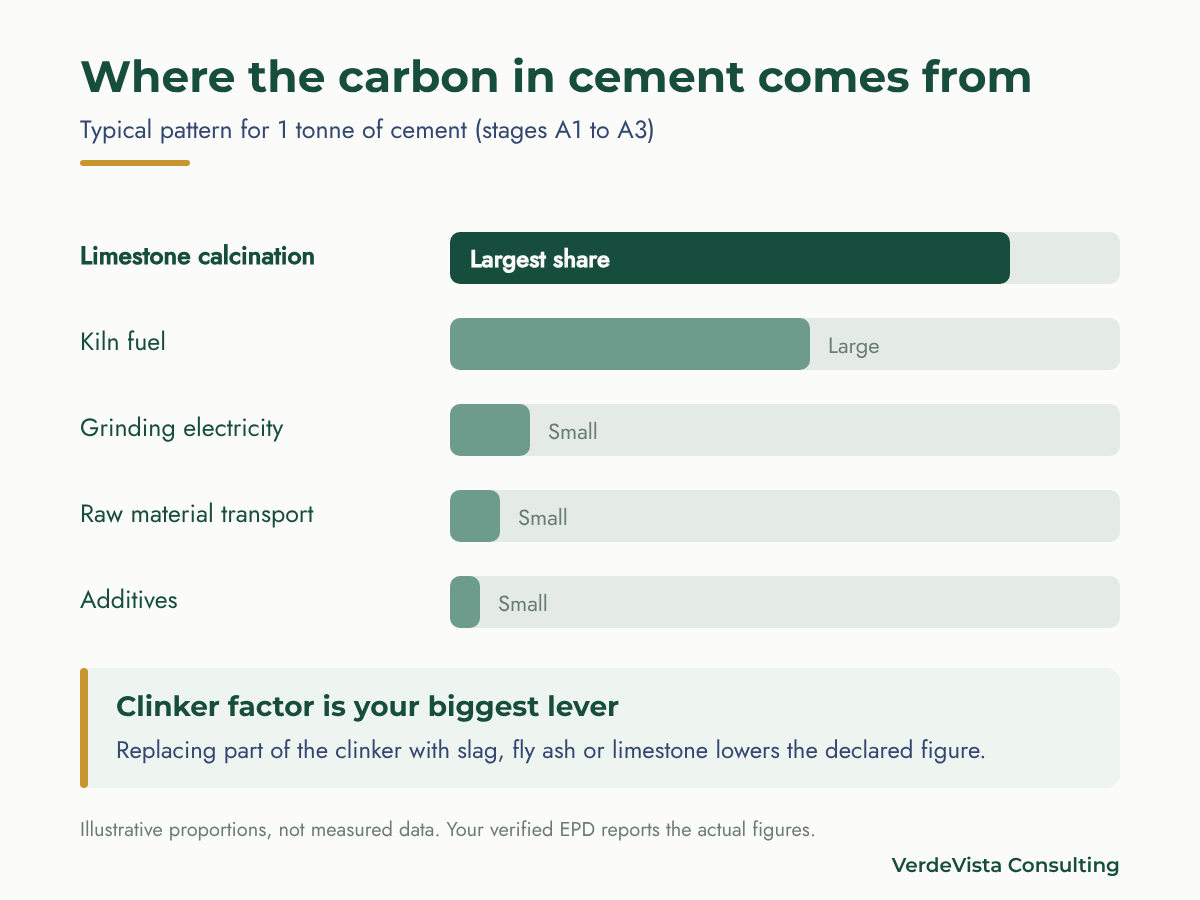
Most of the footprint sits in clinker production. Limestone calcination releases process emissions, and the kiln adds fuel emissions on top. Grinding electricity and transport add smaller amounts. For a producer this means:
- Clinker factor is your biggest lever: replacing part of the clinker with slag, fly ash, limestone or calcined clay lowers the declared figure directly
- Fuel mix and kiln efficiency matter next, so keep clean fuel and energy records from the start
Cement EPD and CBAM: Same Data, Different Purpose
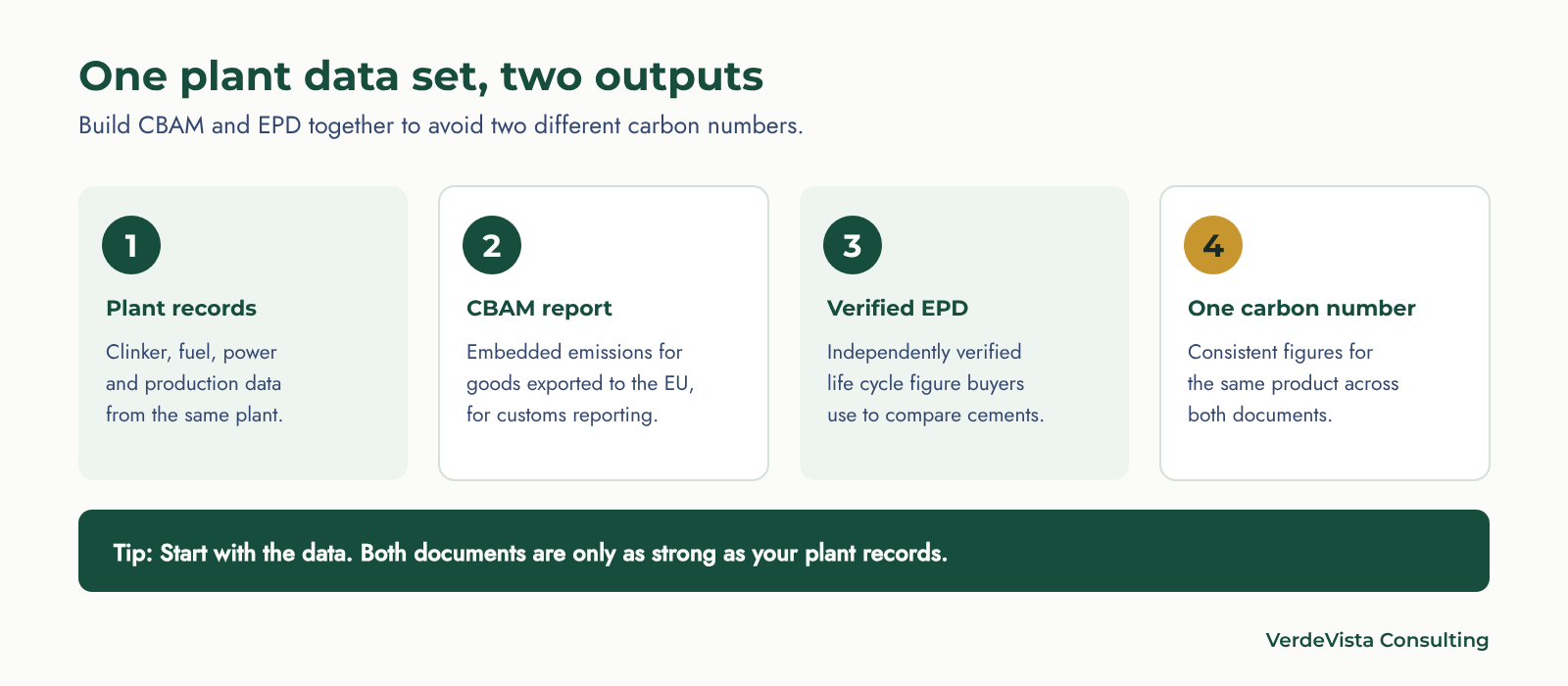
Cement is a CBAM-covered good, so exporters to the EU must report embedded emissions. The CBAM calculation and the EPD use the same plant records, but they answer different questions: CBAM states emissions for customs reporting, while the EPD gives buyers a verified life cycle figure to compare. Building both from one data set avoids two different carbon numbers for the same product. Our CBAM compliance service covers the reporting side, and ISO 14064 verification can support the underlying GHG data.
How to Scope Your First Cement EPD
- Start with volume. Pick the cement types you sell most
- Group where allowed. Some programs let similar cements share one declaration
- Declare per plant. Plant-specific data is stronger than a generic average
- Plan the update. Revisit the EPD when the clinker factor, fuel mix or main constituents change
Common Mistakes Cement Producers Make
- Treating the EPD and the CBAM report as two separate data projects
- Starting the LCA before plant data is complete, which causes most delays
- Using unverified supplier data for additives or fuels
- Not planning updates when the clinker factor changes
Selling to contractors on large projects? See how they review supplier declarations in our guide to EPD for contractors and sustainable procurement.
How VerdeVista Helps
We help cement and concrete producers decide which products to declare first, prepare plant data, align the EPD scope with CBAM and ISO 14064 requirements, and coordinate with the program operator and independent verifier.
Planning your first cement EPD? Book an EPD readiness consultation with VerdeVista and we will map the scope, data needs and timeline for your plant.
FAQ
What is an EPD for cement?
It is a third-party verified declaration of the life cycle environmental impact of cement, usually per tonne, based on a life cycle assessment and the product category rules for cement and building lime.
How is a cement EPD different from a CBAM report?
A CBAM report states embedded emissions for goods exported to the EU, while an EPD is a broader, verified life cycle declaration used by buyers to compare products. Both draw on the same plant data, so build them from one data set.
Which cement types should we declare first?
Start with the cements you sell in the highest volumes, and group similar cements where the program rules allow it.